Smart Confined Space Safety: How Technology Is Transforming Entry Operations
NCMT12
October 3, 2026
Gas Detection, Communication, Real-Time Monitoring and Emergency Response
Confined Space Safety: How Technology Is Transforming Hazard Detection, Monitoring and Emergency Response
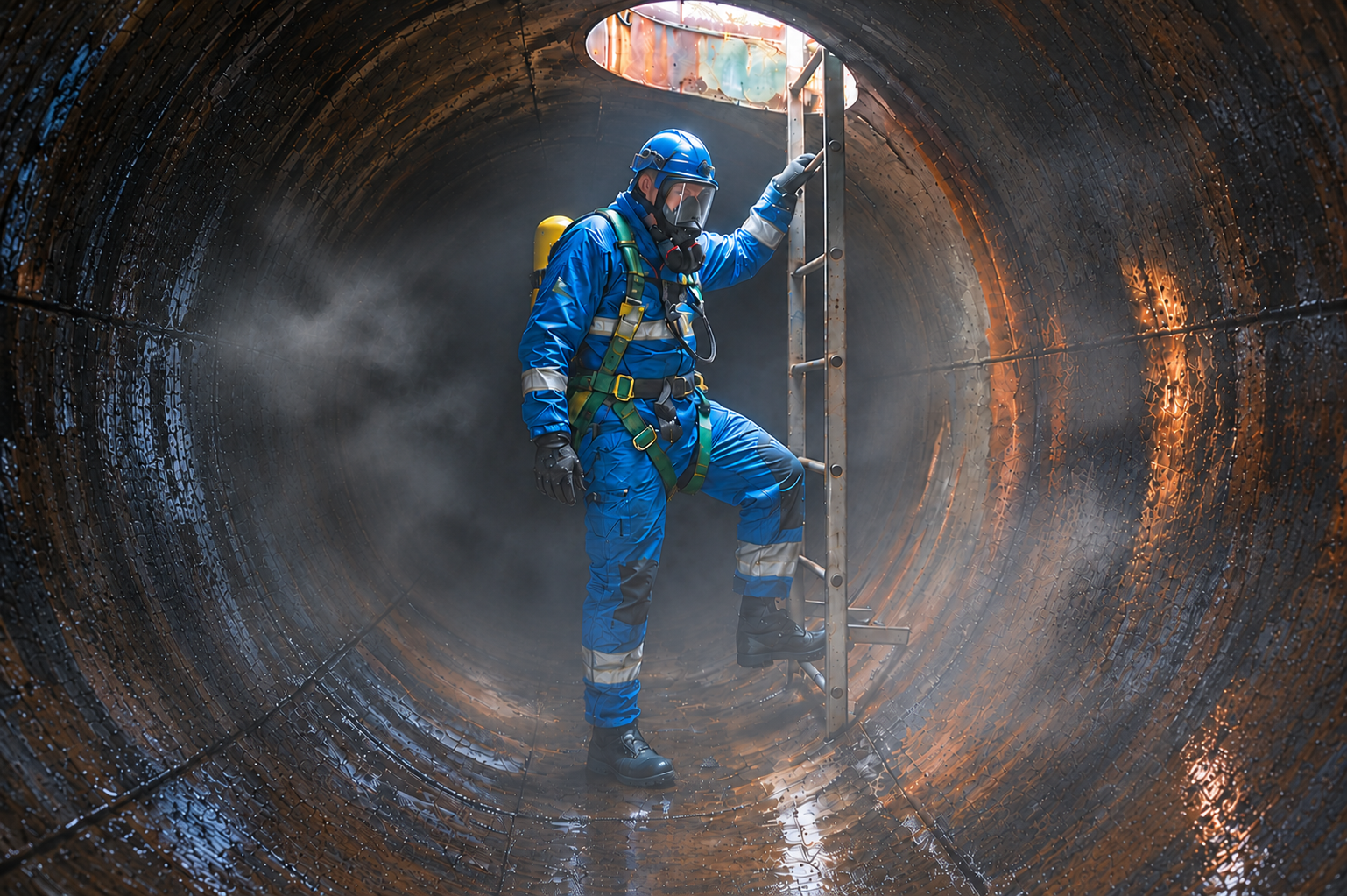
Confined space entry requires planning, competent workers, atmospheric testing, communication and emergency preparedness. New technology is improving how teams detect hazards, communicate and respond to changing conditions.
⚠️ Why Is It Dangerous?
Atmospheric conditions can change because of leaks, chemicals, ventilation failure or changing work activities.
1️⃣ Oxygen deficiency/enrichment
2️⃣Flammable gases and vapours
3️⃣ H₂S and CO
4️⃣ Toxic contaminants


👃 Many hazardous gases cannot be seen or smelled, making reliable monitoring essential.
1️⃣ 📡 Continuous Gas Detection
Modern multi-gas detectors continuously monitor O₂, LEL, H₂S, CO and other gases, providing alarms when limits are reached.
A safe atmosphere can change during the job. Therefore:
🧪 Test → 🚪 Enter → 📊 Monitor → 🚨 Alert → 🆘 Respond
is safer than simply testing once and assuming conditions remain unchanged.
2️⃣ 📶 Wireless & Real-Time Monitoring
Connected detectors can transmit gas readings, alarms, man-down alerts and equipment status to remote teams.
👀 This gives attendants greater visibility into conditions inside the space.
Technology supports the attendant; it does not replace the attendant.
3️⃣ 📢 Communication & Emergency Alerts
Communication can be difficult inside tanks, vessels, tunnels and shafts. Radios, headsets, emergency buttons and remote alarms can improve communication.
🚨 Man-down and no-motion alerts can also notify teams when a worker may be incapacitated.
🆘 However, every alarm must connect to a clear emergency and rescue plan.
4️⃣ 📋 Technology Does Not Replace Safe Entry Procedures
Technology does not eliminate the need for:
🔹 Hazard identification
🔹 Isolation and ventilation
🔹 Atmospheric testing
🔹 Communication
🔹 Entry permits
🔹 Competent personnel
🔹 Rescue arrangements
⚙️ It is a monitoring and control tool—not a replacement for safe work practices.
👷 The Human Factor
Technology is effective only when the correct equipment is selected, calibrated, maintained and understood by trained workers.
🚀 The Future
Confined-space safety is becoming more connected through smart gas detection, wireless communication, real-time dashboards, automated alerts, wearable monitoring, location tracking and digital permits.
🛑 Most Important Principle
Never enter a confined space simply because a gas detector shows a safe reading.
Other hazards include engulfment, mechanical and electrical hazards, stored energy, falls, heat, fire, chemicals and rescue difficulties.
✅ Conclusion
Technology does not replace people. It gives trained workers better information to make faster, safer decisions.
🔔 Technology can detect the warning. People must be prepared to act on it.